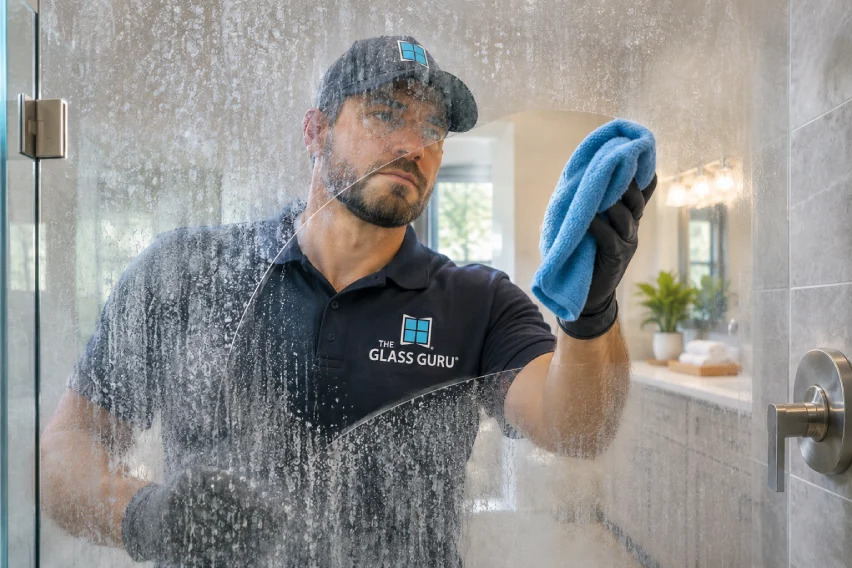
There’s nothing quite like the look of a clean, sparkling glass shower door. It makes your bathroom feel brighter, more open, and refreshed. But over time, cloudy spots, white streaks, and stubborn residue can take away from that crystal-clear appearance.
If you’ve tried cleaning your shower glass only to find the same cloudy marks staring back at you, you’re not alone.
Hard water stains are a common frustration for homeowners. The good news? Many can be removed with the right approach. But sometimes, what looks like a stubborn stain is actually permanent damage to the glass itself.
Knowing the difference can save you time, effort, and frustration.
What Causes Hard Water Stains on Glass?
Hard water contains dissolved minerals, primarily calcium and magnesium. When water droplets evaporate from your shower doors or other glass surfaces, those minerals can remain behind.
Over time, the deposits build up, creating a cloudy, chalky, or spotted appearance.
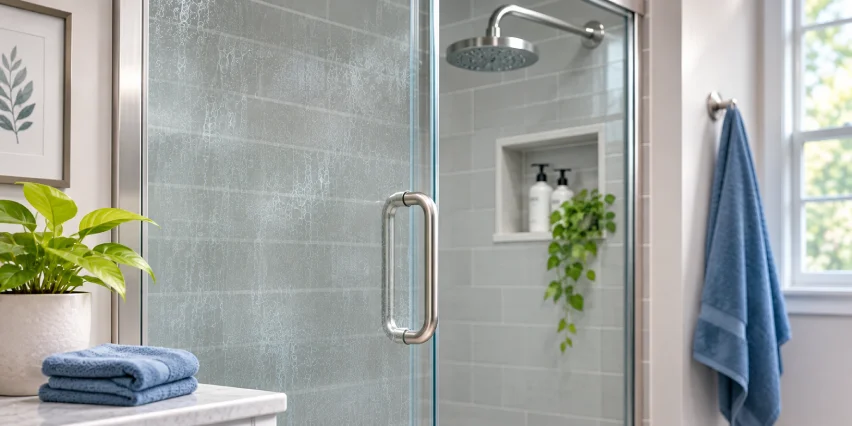
You may notice:
- White spots or streaks on shower doors
- Cloudy patches that return after cleaning
- Rough or chalky residue on glass surfaces
- Mineral buildup around shower hardware and fixtures
- Glass that looks dull even after regular washing
These deposits can become more difficult to remove the longer they remain on the surface.
However, not every cloudy mark is simply a layer of minerals waiting to be cleaned away.
How to Remove Hard Water Stains From Shower Glass
If the stains are mineral deposits sitting on the surface, you may be able to restore your glass’s clarity using a few simple cleaning methods.
1. Start With a Gentle Cleaning Solution
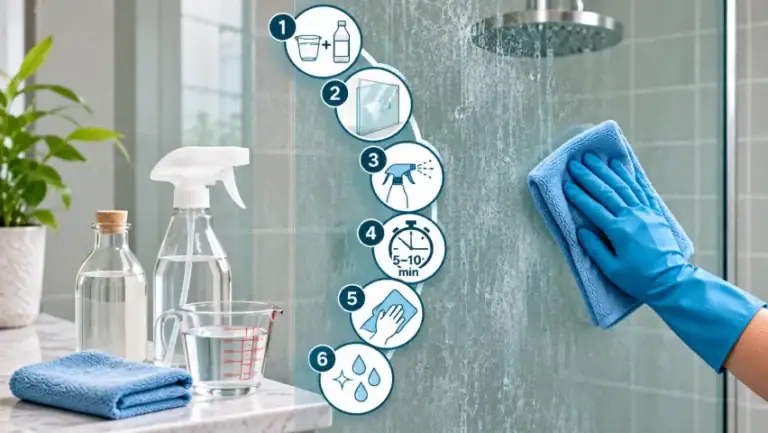
For ordinary mineral buildup, a diluted white vinegar solution may help dissolve deposits.
Try these steps:
- Mix equal parts white vinegar and water in a spray bottle.
- Test the solution on a small, inconspicuous area first.
- Apply it to compatible, uncoated glass surfaces.
- Allow it to sit for approximately 5–10 minutes without letting it dry.
- Gently wipe the glass with a soft microfiber cloth or nonabrasive sponge.
- Rinse thoroughly with clean water and dry the surface.
Important: Vinegar is acidic and may damage certain glass coatings, natural stone, grout, and metal finishes. Always follow the glass or shower enclosure manufacturer’s cleaning recommendations. Never mix vinegar with bleach or other cleaning chemicals.
2. Use a Glass-Safe Mineral Deposit Remover
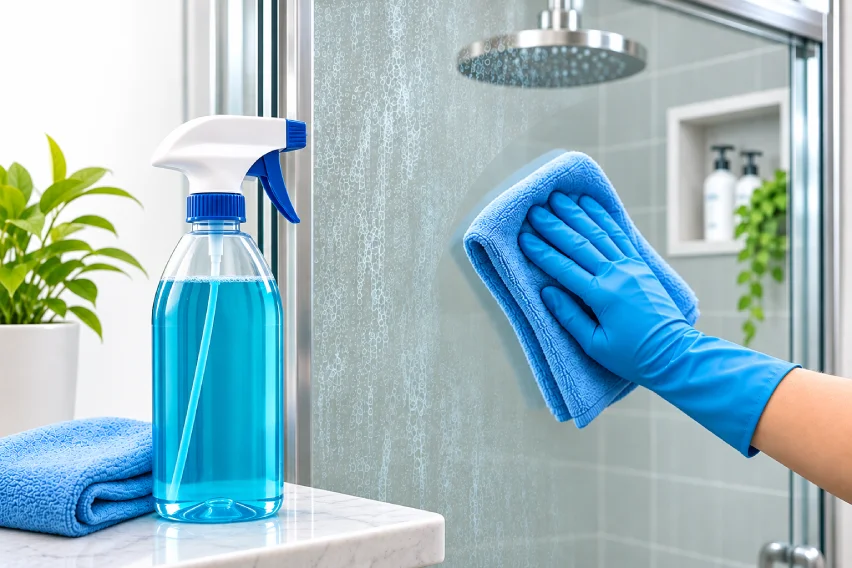
If basic cleaning doesn’t work, a product specifically formulated to remove hard water deposits may be helpful.
Look for a cleaner approved for your type of shower glass, particularly if it has a protective coating.
Follow the product’s instructions carefully, and avoid abrasive powders, steel wool, razor blades, or harsh scrubbing tools that could scratch or damage the glass.
The goal is to remove the buildup without creating a bigger problem.
3. Rinse and Dry the Glass Thoroughly
Removing leftover moisture helps prevent new mineral deposits from forming as water evaporates.
After cleaning, rinse away any remaining product and dry the glass with a clean microfiber cloth.
If your glass looks noticeably clearer afterward, the cloudiness was likely caused, at least in part, by removable surface buildup.
But what happens when the spots won’t go away?
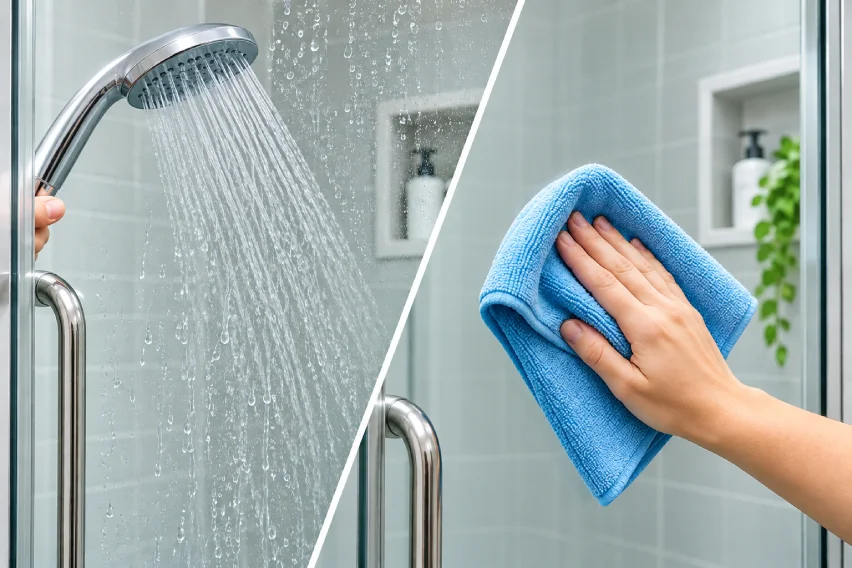
When Hard Water Stains Can’t Be Removed
Sometimes, the cloudy appearance isn’t just sitting on the glass. The surface itself may have changed.
Over time, mineral deposits and repeated exposure to moisture or cleaning chemicals can contribute to glass surface deterioration, including etching or corrosion.
Unlike ordinary mineral buildup, permanent surface damage cannot simply be washed away.
Signs your glass may have permanent damage include:
- Cloudiness that remains after appropriate cleaning
- A dull or hazy appearance across large sections of glass
- Marks that appear embedded in the surface
- Persistent discoloration or uneven clarity
- Glass that never looks fully transparent, even when dry
These symptoms don’t automatically mean the glass is permanently damaged. Residual buildup, coating deterioration, and other conditions can look similar.
A professional assessment can help determine whether additional cleaning, specialized restoration, or replacement is the most practical solution.
Hard Water Stains vs. Glass Etching: What’s the Difference?
Although they can look similar, mineral deposits and glass etching are two different issues.
Hard water stains are deposits left behind when mineral-rich water evaporates. Because the minerals are on the surface, appropriate cleaning products may remove them.
Glass etching or corrosion involves changes to the glass surface itself. Cleaning cannot reverse those changes.
In some cases, specialized glass restoration techniques may improve the appearance of affected glass. However, results depend on the type, depth, and extent of the damage.
When restoration isn’t practical, replacing the affected glass may be the better long-term solution.
The important thing is identifying the condition before spending more time and money on cleaning products that may not solve it.
How to Prevent Hard Water Stains From Coming Back
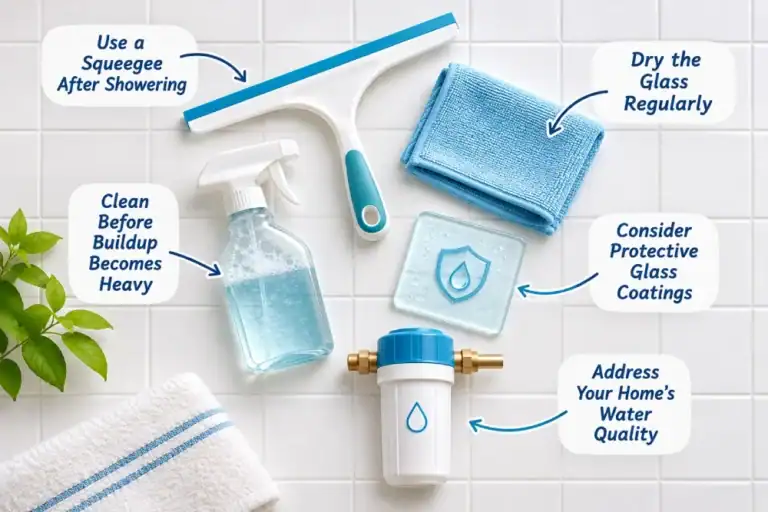
Whether you’ve successfully removed mineral deposits or recently installed new shower glass, a few simple habits can help maintain its appearance.
Use a Squeegee After Showering
Removing water droplets before they evaporate reduces the minerals left behind on the glass.
A quick pass with a squeegee after each shower can make routine maintenance easier.
Dry the Glass Regularly
Use a soft microfiber cloth to remove moisture from corners, edges, and areas where water tends to collect.
Clean Before Buildup Becomes Heavy
Regular cleaning with manufacturer-approved products can help prevent mineral deposits from becoming increasingly difficult to remove.
Consider Protective Glass Coatings
Some shower glass products are available with protective coatings designed to make cleaning easier and reduce the adhesion of water and mineral deposits.
These coatings aren’t maintenance-free, but they may help simplify ongoing care.
Address Your Home’s Water Quality
If hard water buildup is a recurring issue throughout your home, a water softening system may help reduce calcium and magnesium levels.
Improving water quality can help limit future mineral deposits on glass, fixtures, and other surfaces.
Should You Clean, Restore, or Replace Your Shower Glass?
The right solution depends on the condition of the glass.
Cleaning may be enough when:
- Deposits are limited to the surface.
- The glass is otherwise in good condition.
- Appropriate cleaning noticeably improves clarity.
Professional evaluation may be helpful when:
- Cloudiness persists after careful cleaning.
- You suspect permanent etching or coating damage.
- You’re unsure which cleaning products are safe for your glass.
Replacement may be worth considering when:
- Surface damage is extensive or permanent.
- Restoration isn’t practical or cost-effective.
- The glass is cracked, chipped, or otherwise compromised.
- You’re ready to update the appearance of your shower enclosure.
Replacing damaged shower glass doesn’t necessarily mean remodeling your entire bathroom. Depending on the enclosure’s design and condition, replacing individual glass components may be possible.
A qualified glass professional can help you understand your options.
Give Your Bathroom a Clearer Look Before the Holidays

With holiday gatherings approaching, it’s natural to notice the little details around your home.
A bathroom with clean, clear shower glass can feel brighter, more polished, and more welcoming for guests.
But you don’t have to wait for a special occasion to enjoy a space that looks its best.
Whether you’re tackling mineral buildup, maintaining your existing shower glass, or considering replacement for permanently damaged panels, taking care of the details can make a noticeable difference.
The Bottom Line
Hard water stains don’t always mean your shower glass needs replacing.
Many mineral deposits can be removed with proper cleaning and regular maintenance. But when cloudiness is caused by permanent etching or surface damage, cleaning alone may not restore the glass’s original appearance.
Knowing when to clean, when to seek professional advice, and when to consider replacement can help you make a more informed decision.
Contact your local Glass Guru to explore your glass replacement and shower enclosure options
Disclaimer- Not all services are available in all markets. Contact your local The Glass Guru for service availability. Each location is independently owned and operated.